How to Start Investing in 2026: A Beginner’s Guide for Europe
TL;DR: You do not need a finance degree or a large salary to start investing. The order matters more than the size: first clear expensive debt and build an emergency fund, then put regular money into low-cost, broadly diversified ETFs, add some bonds for stability, and only once those basics are solid consider higher-risk income options like P2P lending. In 2026 cash in a bank still loses purchasing power to inflation, so doing nothing has a cost too. This guide is general education, not personalised investment advice.
If you have been meaning to start investing “next month” for a while, you are in good company. The hardest part is rarely the maths. It is knowing the right first step, the right second step, and which exciting-sounding options to skip until later. Below is the path we would walk a friend through, built for someone in Europe in 2026.
A quick word on why this is worth doing now. Bank deposits across the euro area pay roughly 2% to 3% in 2026, and the best easy-access savings products from brokers like Trade Republic and Revolut sit around 2.00% [source: eupersonalfinance.eu, https://www.eupersonalfinance.eu/articles/best-savings-accounts-europe]. Meanwhile euro area inflation was 3.2% in May 2026 [source: Eurostat, https://ec.europa.eu/eurostat/web/products-euro-indicators/w/2-02062026-ap]. When prices rise faster than your savings earn, money sitting still quietly loses value. That gap is the whole reason to learn this.
Before you invest: clear expensive debt and build a safety net
This is the step people most want to skip, and the one that protects everything that comes after.
First, deal with high-interest debt. A credit card or overdraft charging 15% to 25% per year will almost always cost you more than investing earns. Paying it off is a guaranteed return equal to the interest rate you stop paying. There is no ETF that reliably beats that, so clear it first.
Second, build an emergency fund. The standard guidance is to hold 3 to 6 months of essential expenses, meaning rent or mortgage, utilities, food, insurance and minimum debt payments, not your nice-to-haves [source: NerdWallet, https://www.nerdwallet.com/banking/learn/emergency-fund-calculator]. If your income is stable, lean toward three months. If you are self-employed or your income swings, lean toward six. A useful first milestone before the full amount is a small starter buffer of around 1,000 EUR, enough to absorb a car repair or a broken phone without reaching for a credit card [source: Vanguard, https://investor.vanguard.com/investor-resources-education/emergency-fund].
Keep this safety net in cash, in an instant-access savings account, not in investments. Its job is to be boring and available the day you need it. Investments can fall in value exactly when you are also having a bad month, and you do not want to be forced to sell at a low point.
The step-by-step path to start investing
Once the debt is cleared and the safety net is in place, here is the order we recommend.
Step 1: Set your goals and time horizon
Before choosing any product, answer one question: when do you expect to need this money?
- Short term (under 3 years), for example a deposit on a flat: keep it in cash or very safe holdings. Stocks can drop 20% or 30% in a bad year, and three years is not long enough to count on a recovery.
- Medium term (3 to 7 years): a mix of stocks and bonds.
- Long term (7 years or more), for example retirement: this is where investing shines, because time smooths out the bumps.
Your time horizon, not your gut feeling about the market, should drive how much risk you take.
Step 2: Keep your emergency fund funded
Investing and your safety net work as a pair. As you start investing, keep topping the emergency fund back up whenever you dip into it. This is what lets you stay invested through a rough patch instead of panic-selling. Think of it as the foundation the rest of the house sits on.
Step 3: Buy low-cost, broadly diversified ETFs
For most beginners, this is the core of the whole plan.
An ETF (a low-cost fund that holds hundreds or thousands of shares or bonds and trades like a single stock) lets you own a slice of the entire market in one purchase. A global index ETF such as one tracking the MSCI World owns shares in around 1,400 large companies across developed countries. That gives you diversification (spreading money across many investments so that one company failing does not sink your savings) automatically.
Two things make an ETF beginner-friendly:
- Low cost. ETFs charge an annual fee called the TER (total expense ratio). In Europe, broad global UCITS ETFs are available with a TER as low as 0.07% to 0.20% per year [source: justETF, https://www.justetf.com/en/how-to/msci-world-etfs.html]. On 10,000 EUR, a 0.15% fee is just 15 EUR a year. (“UCITS” simply means the fund follows EU investor-protection rules, which is what you want as a European.)
- It does the work for you. You are not picking individual winners. You are buying the whole market and letting it compound over years.
The simplest approach is to set up an automatic monthly purchase of one global index ETF and leave it alone. This is sometimes called a savings plan, and most European brokers offer it for free.
Step 4: Add bonds or fixed income for stability
Stocks grow your money over time but can be a rollercoaster. Bonds (loans you make to a government or company that pay you regular interest and return your money at the end) are steadier, and they cushion the ride.
In 2026 the yields here are actually reasonable: the German 10-year government bond yielded about 2.87% in late June 2026 [source: Trading Economics, https://tradingeconomics.com/germany/government-bond-yield], and a broad euro government bond ETF showed a yield to worst of around 3.26% earlier in the year [source: Vanguard, https://www.vanguard.co.uk/professional/product/etf/bond/9591/eur-eurozone-government-bond-ucits-etf-eur-accumulating]. You can buy a single euro government bond ETF the same way you buy a stock ETF.
A common beginner rule of thumb is to hold a bond share roughly matching your caution: a younger long-term investor might keep most in stocks and a smaller slice in bonds, while someone closer to needing the money holds more in bonds. There is no single correct number, only what lets you sleep at night and stay invested.
Step 5: Add alternatives like P2P lending for monthly income
Once the basics above are genuinely in place, you can consider a small “income sleeve” for cash flow. This is where P2P lending fits.
P2P lending (peer-to-peer, where you lend money to vetted borrowers through an online platform and collect the interest) can pay monthly returns that are higher than a savings account. The trade-off is real: it carries more risk than ETFs or government bonds. A borrower can default, your money can be locked up while a loan runs, and most P2P platforms are not covered by the investor-compensation schemes that protect regulated brokerage and bank accounts. So this is a later step and a small slice, never your starting point or your whole portfolio.
If you do explore it, platform quality is everything. We rank 44 European platforms, and Maclear places third overall with the highest realised yields in our coverage.
📊 Highest-yielding platform we track: Once your basics are in place, P2P lending can add monthly income. Maclear ranks #3 of the 44 European platforms we track (CrowdIndex score 8.4/10): Swiss SME lending, realised yields 14.5% to 14.9%, default about 0.15%. Read the platform card → | Visit Maclear and claim the EUR 30 welcome bonus →
To be straight with you about Maclear’s profile: it is regulated by a Swiss self-regulatory organisation (PolyReg) for anti-money-laundering supervision only. That is not the same as investor protection, and it is not an EU ECSP licence or MiFID II coverage, so there is no compensation scheme behind your money. It runs a 2% provision fund as a buffer, and the minimum is 50 EUR per loan. It has had one default to date, Vibroedil for 150,000 EUR in July 2025, which was repaid from the founders’ own funds rather than by selling collateral, meaning its collateral-recovery process has not yet been proven in practice. A secondary market is live if you want to sell positions early. None of that makes it a bad choice. It makes it a higher-risk choice that belongs after, not instead of, your ETF and bond foundation. For more, see Best P2P for Beginners and What is P2P Investing.
Step 6: Keep costs low and automate everything
The last step is the one that quietly decides how well you do: keep fees down and remove yourself from the decision-making.
- Automate your contributions. Set a monthly transfer into your ETF savings plan on payday. Money you never see is money you never spend.
- Watch the fees. Favour low-TER funds and a broker with low or zero trading commissions.
- Do not tinker. Checking your portfolio daily and reacting to headlines is how beginners lose money. Investing is closer to planting a tree than trading.
How much do you need to start?
Less than most people assume. You do not need thousands of euros to begin.
Several European brokers now let you buy fractional shares (a small slice of one share or ETF, rather than a whole unit), so a single ETF that costs 100 EUR per unit is still within reach. Trading 212 and Lightyear allow fractional investing from 1 EUR, while XTB sets its minimum at 10 EUR [source: Freenance, https://freenance.io/comparisons/best-broker-for-fractional-shares/]. That means you can genuinely start with what you have and add to it monthly.
The more useful number is not your starting balance but your monthly habit. Investing 100 EUR or 200 EUR every month, consistently, for ten years will almost always beat a single large lump sum invested once and then forgotten. Consistency is the engine.
A simple beginner allocation (for illustration)
These are example mixes to show how the pieces fit together, not a recommendation for your situation. Your right answer depends on your time horizon and how much risk you can stomach.
| Holding | Conservative beginner | Balanced beginner |
|---|---|---|
| Global stock ETF | 40% | 60% |
| Euro government bond ETF | 45% | 30% |
| Cash buffer (beyond emergency fund) | 10% | 5% |
| P2P income sleeve (optional, later step) | 5% | 5% |
Two things to notice. First, the emergency fund is not in this table at all, because it is separate cash that sits outside your investments. Second, the P2P sleeve is small in both rows. That is deliberate: it is the highest-risk piece, so it earns the smallest allocation and only once everything else is funded.
Common beginner mistakes to avoid
We see the same handful of errors repeatedly. Sidestepping these puts you ahead of most people who are just starting out.
- Chasing yield. A headline rate of 12% or 15% is not free money, it is a signal of higher risk. Understand why a return is high before you reach for it, and never let the income sleeve crowd out your safe foundation.
- Investing before the emergency fund exists. Without a cash buffer, the first surprise expense forces you to sell investments at a bad moment, or worse, back onto a credit card.
- No diversification. Putting everything into one company, one country, or one platform means a single bad outcome can sink you. Broad ETFs solve this in one purchase.
- Panic selling. Markets fall sometimes. Selling after a drop locks in the loss. The investors who do well are usually the ones who simply did not flinch.
- Letting fees eat the returns. High fund fees and frequent trading quietly compound against you over the years. Keep both low.
Frequently asked questions
How much money do I need to start investing in 2026?
You can start with very little. Brokers offering fractional shares let you invest from 1 EUR to 10 EUR per purchase [source: Freenance, https://freenance.io/comparisons/best-broker-for-fractional-shares/]. What matters far more than your starting amount is building a steady monthly habit and keeping fees low.
Is it better to keep cash in a savings account or invest it?
It depends on the time frame. Money you might need within three years, plus your emergency fund, belongs in cash. Bank deposits in 2026 pay roughly 2% to 3% [source: eupersonalfinance.eu, https://www.eupersonalfinance.eu/articles/best-savings-accounts-europe], but with inflation at 3.2% [source: Eurostat, https://ec.europa.eu/eurostat/web/products-euro-indicators/w/2-02062026-ap], cash you will not touch for many years tends to lose purchasing power. That long-term money is what you invest.
Where should a complete beginner invest first?
For most beginners the first investment is a single low-cost, globally diversified index ETF bought through an automatic monthly savings plan. It gives you instant diversification, low fees, and nothing to manage. Higher-risk options like P2P lending come later, as a small slice, not first.
Is P2P lending safe for beginners?
It is higher-risk than ETFs or government bonds and is best treated as a later, small part of a portfolio rather than a starting point. Most P2P platforms lack the investor-compensation protection that regulated banks and brokers carry, so capital is genuinely at risk. If you do try it, prioritise platform quality and keep the allocation small. See Best P2P for Beginners for our beginner-focused breakdown.
What to read next
- Best P2P for Beginners - our beginner-focused guide to picking your first P2P platform.
- Where to Invest Europe 2026 - a wider look at where European investors are putting money in 2026.
- How to Invest 10000 Euros Europe 2026 - the dedicated €10,000 portfolio guide: three templates with honest return math and a 12-month plan.
- P2P vs ETF vs Bank - how P2P lending stacks up against ETFs and bank savings on risk and return.
This article is general educational information about investing in Europe and is not personalised financial advice. All investing carries risk, including the loss of your capital. Consider your own circumstances and, if needed, speak to a qualified adviser before investing.
Why you can trust CrowdIndex
- 44platforms in continuous coverage
- 6editorial dimensions per review
- 33-57sources per platform dossier
- Qre-checked every quarter
Sources
We ask editors to work from primary sources: regulator registers and filings, audited reports, platform disclosures and court records. Every external source this article relies on is listed below.
About the author
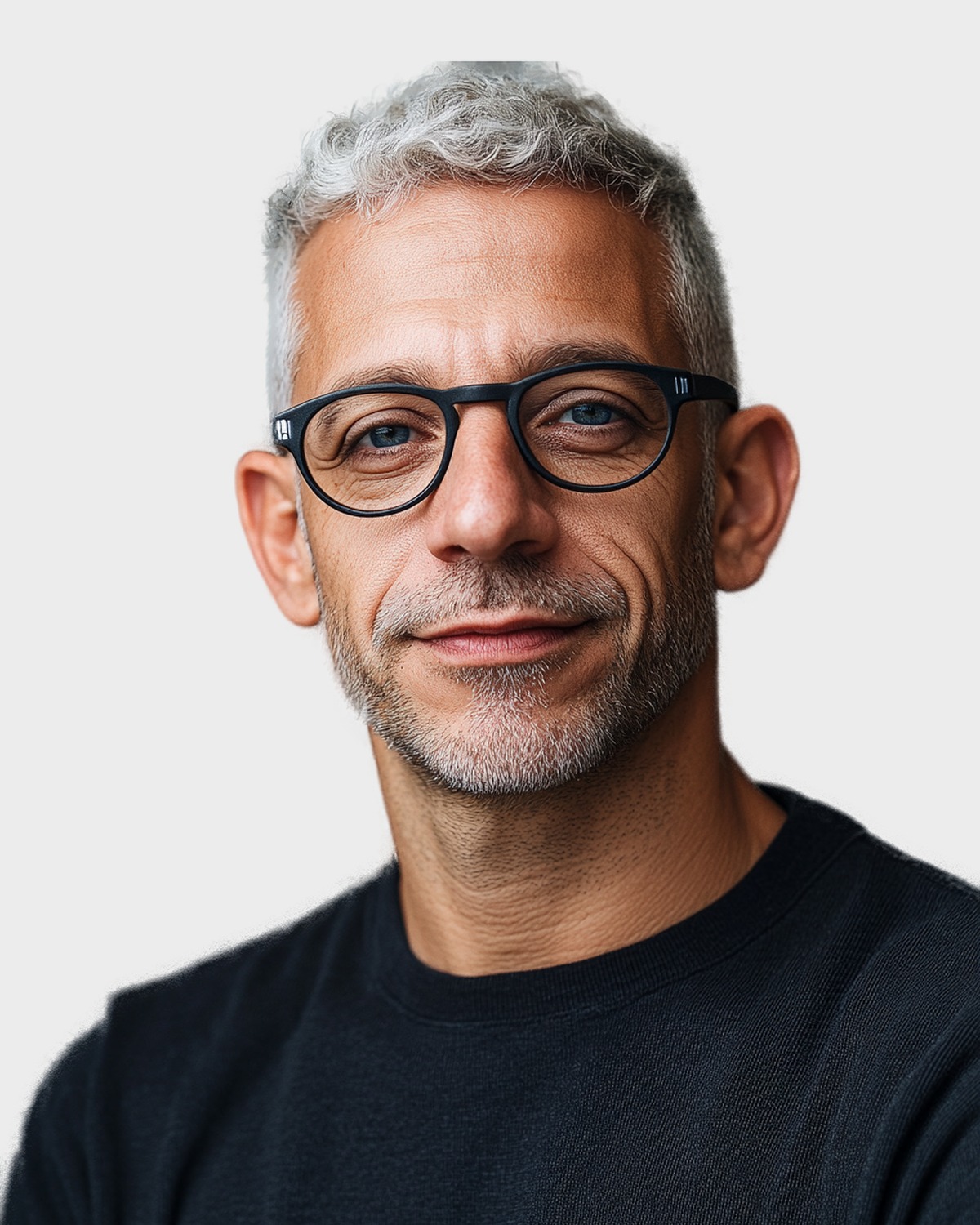
Daniel Brenner Senior Editor
Daniel oversees CrowdIndex's editorial framework and signs off every platform review on the site. He spent six years at Handelsblatt covering retail banking and consumer finance, then moved client-side as Senior Content Manager at N26, where he shipped financial-product copy for eight million European customers. Daniel joined CrowdIndex in 2026 to build the editorial discipline the P2P sector had been missing. Journalism MA from Universität Hamburg, BSc in Economics from Mannheim.
Previously: Handelsblatt, N26
Reviewed by Lucia Marchetti, Head of Research